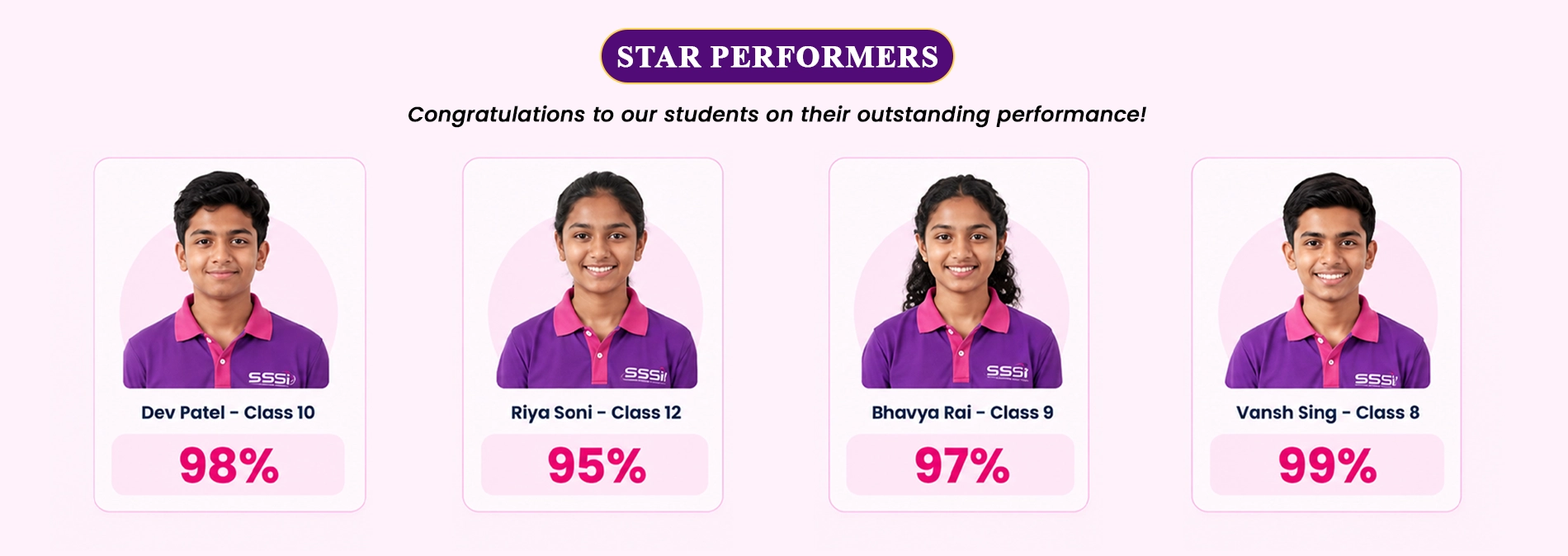
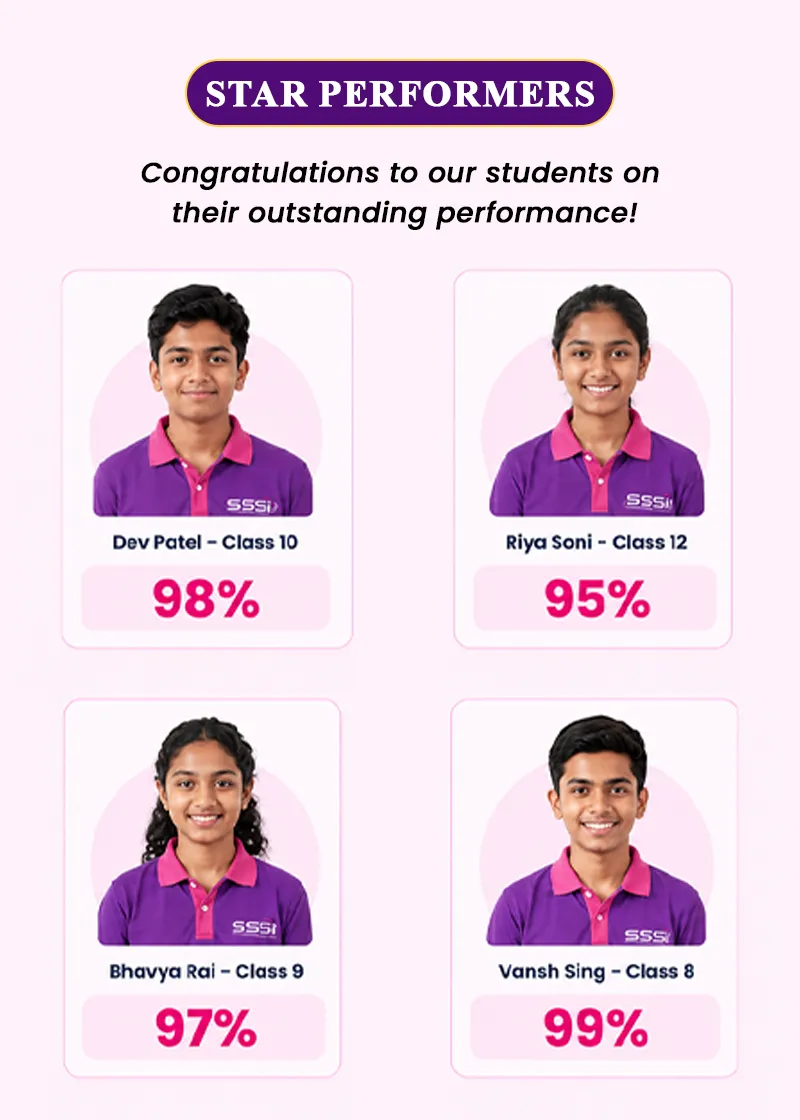
Shaping Futures




| Chapter Name | Topics & Subtopics | Learning Objectives |
|---|---|---|
| Term 1 | ||
| Patterns in Mathematics | • What is Mathematics? • Patterns in Numbers • Recognising and Extending Patterns • Understanding the Concept of Visualising • Number Sequences Using Pictures • Identifying Triangular, Square, and Cube Numbers • Using Dot Diagrams • Recognising That Some Numbers Belong to Multiple Sequences (e.g., 36 Is Both a Triangular and a Square Number) Creating Pictorial Representations of Number Sequences Creating Pictorial Representations of Hexagonal Number Sequences Understanding How Different Number Sequences Are Related Identifying and Analysing Patterns in Shapes Exploring How Shape Sequences Connect to Number Sequences Developing Critical Thinking and Visualisation Skills |
Understand the concepts and vocabulary of Patterns in Mathematics; investigate the PDF-listed topics using examples and activities. |
| Lines and Angles | • Definition and Real-Life Examples of Points • Representing Points with Capital Letters • Concept of Line Segments with Endpoints • Drawing and Identifying Line Segments • Definition and Characteristics of a Line • Infinite Extension in Both Directions • Parallel Lines and Transversal • Definition of a Ray with One Endpoint and Indefinite Extension Real-Life Examples of Rays Formation of Angles with Two Rays Identifying Vertex and Arms of Angles Naming Angles Using Three Points Visual Comparison of Angles Superimposition Method for Comparing Angles Acute, Obtuse, Right, Straight, and Reflex Angles Identifying and Classifying Angles Using a Protractor to Measure Angles Degree Measure and Its Significance Steps to Draw Specific Angles Using a Protractor Naming and Labelling Angles Fractional Rotation or Turns Expressed as Fractions and Vice Versa |
Understand the concepts and vocabulary of Lines and Angles; investigate the PDF-listed topics using examples and activities. |
| Number Play | • Introduction to Indian and International Number • Systems and Their Relationships • Conversion of Numbers Between International • and Indian Systems • Roman Numerals Involving Large Numbers and Relevant Operations on Roman Numerals Identifying and Marking Supercells Creating Tables with Maximum or Minimum Supercells Placing Numbers in Their Appropriate Positions Identifying Patterns and Comparing Values Identifying Digit Sums • Detecting Repeated Digits and Patterns • Pretty Palindromic Patterns • Identifying and Creating Palindromic • Numbers • Reverse-and-Add Palindromes Activity • The Magic Number of Kaprekar • Discovering the Kaprekar Constant (6174) • Performing Kaprekar Operations on 3- and 4- Digit Numbers • Clock and Calendar Numbers • Identifying Palindromic Times and Dates • Exploring Repeating Calendar Patterns • Playing with Number Patterns • Recognizing and Extending Number Patterns • Exploring Sums and Sequences • Whole Numbers • Introduction to Whole Numbers • Properties of Whole Numbers • Commutative • Associative • Distributive • Identity • Operation on Whole Numbers • The Collatz Conjecture • Understanding the Sequence Formation Rule • Exploring the Conjecture’s Unsolved Nature • Simple Estimation • Estimating Distances, Quantities, and Time • Practising Quick and Reasonable Estimations • Games and Winning Strategies • Playing Number-Based Games • Discovering Strategies for Guaranteed Wins |
Understand the concepts and vocabulary of Number Play; investigate the PDF-listed topics using examples and activities. |
| The Other Side of Zero | • Introduction to Integers • Understanding Numbers Less Than Zero • Positive and Negative Numbers • Visualising Integers on a Number Line • Comparing and Ordering Integers • Using the Number Line to Compare Integers • Identifying Larger and Smaller Integers • Ordering Positive and Negative Integers • Addition of Integers • Adding Positive and Negative Integers • Using the Building of Fun (Floor Movements) • Model • Combining Button Presses as Addition • Operations • Subtraction of Integers • Using Subtraction to Find the Movement • Needed • Applying Inverse Operations • Visualising Subtraction on the Number Line • Adding and Subtracting Larger Integers • Performing Operations with Larger Numbers • Using Unmarked Number Lines for Visualisation • Converting Subtraction to Addition and Vice • Versa • Applications of Integers • Bank Credits and Debits • Geographical Cross-Sections (Heights Above • and Below Sea Level) • Temperature Readings in Positive and Negative Degrees Celsius • Games and Puzzles with Integers • Playing Integer-Based Grid and Token Games • Creating Border Sum Grids and Exploring • Symmetry • Applying Integer Operations Through Interactive • Activities |
Understand the concepts and vocabulary of The Other Side of Zero; investigate the PDF-listed topics using examples and activities. |
| Prime Time | • Common Multiples and Common Factors • Identifying Multiples and Factors • Finding Common Multiples and Common • Factors • Playing Games Like 'Idli-Vada' and Treasure • Hunting Using Multiples and Factors • Prime Numbers • Definition of Prime and Composite Numbers • Identifying Prime Numbers Using the Sieve of Eratosthenes Properties and Patterns of Prime Numbers • Co-prime Numbers • Understanding Co-Prime Numbers • Identifying Pairs of Co-Prime Numbers • Real-Life Applications of Co-Prime Numbers • Prime Factorisation • Factorising Numbers into Prime Factors • Using Factor Trees for Prime Factorisation • Verifying Prime Factorisation • Divisibility Tests • Rules for Divisibility by 2, 3, 4, 5, 8, 10, and 11 • Identifying Patterns to Check Divisibility • Applying Divisibility Tests to Larger Numbers • Fun with Numbers • Special Properties of Numbers • Prime Puzzles and Patterns • Using Creative Games and Puzzles to Explore • Number Properties |
Understand the concepts and vocabulary of Prime Time; investigate the PDF-listed topics using examples and activities. |
| Fractions and Decimals | • Fractional Units and Equal Shares • Understanding Fractions as Equal Shares of a • Whole • Comparing Fractions with the Same • Numerator or Denominator • Fractional Units as Parts of a Whole • Identifying Fractions of a Whole Object • Visualising Fractions Through Division and Shapes • Measuring Using Fractional Units • Using Fractional Units to Measure Quantities • Representing Fractional Units on a Number • Line • Mixed Fractions • Understanding Mixed Fractions (Whole • Number + Fractional Part) • Converting Mixed Fractions into Improper • Fractions and Vice Versa • Equivalent Fractions • Identifying and Generating Equivalent • Fractions • Using Fraction Walls and Visual Models to Compare Fractions • Comparing Fractions • Comparing Fractions with the Same and Different Denominators Using Cross-Multiplication and Common Denominators • Addition and Subtraction of Fractions • Adding and Subtracting Fractions with the Same and Different Denominators Applying Brahmagupta’s Method for Addition and Subtraction • Introduction to Decimals • Place Value in Decimal Numbers • Addition and Subtraction of Decimals • Comparing Decimals. • Word Problems related to Decimals • Pattern in Mathematics • Lines and Angles • Number Play • The Other Side of Zero • Prime Time • Fractions and Decimals |
Understand the concepts and vocabulary of Fractions and Decimals; investigate the PDF-listed topics using examples and activities. |
| Term 2 | ||
| Perimeter and Area | • Perimeter • Definition and Real-Life Examples of Perimeter • Perimeter of a Rectangle, Square, and Triangle • Perimeter of Regular Polygons • Circumference of a Circle • Comparing Perimeters of Different Shapes • Area • Definition and Real-Life Examples of Area • Area of Rectangles, Squares, and Composite • Figures • Estimating and Measuring Area Using Grid • Paper • Calculating the Area of Irregular Shapes • Area of a Triangle • Relationship Between the Area of a Rectangle • and a Triangle • Formula for the Area of a Triangle • Using Grid Paper to Verify the Area Formula • Comparing Perimeter and Area • Understanding How Shapes with the Same • Area Can Have Different Perimeters • Visualising and Comparing Figures with Equal • Areas but Different Perimeters • Exploring Creative Shapes and Their • Perimeters |
Understand the concepts and vocabulary of Perimeter and Area; investigate the PDF-listed topics using examples and activities. |
| Playing with Constructions | • Using Compass and Ruler • Drawing Circles with a Compass • Creating Curved and Circular Shapes • Identifying the Radius and Center of a Circle • Constructing Squares and Rectangles • Constructing Squares and Rectangles with Given Side Lengths Rotating Squares and Rectangles While Preserving Their Properties • Constructing Composite Figures • Drawing Creative Figures Using Geometric • Shapes • Constructing Symmetrical and Artistic • Designs • Combining Squares, Rectangles, and Curves • Exploring Diagonals of Squares and Rectangles • Constructing Diagonals and Measuring Their • Lengths • Identifying Equal Angles Formed by Diagonals • Verifying the Symmetry of Diagonals in Squares and Rectangles • Constructing Figures with Specific Properties • Constructing Rectangles with Given Side • Lengths and Diagonals • Dividing Rectangles into Squares |
Understand the concepts and vocabulary of Playing with Constructions; investigate the PDF-listed topics using examples and activities. |
| Rotational Symmetry | • Definition of Rotational Symmetry • Identifying Angles of Symmetry • Exploring Figures With Different Orders of Rotational Symmetry Rotational Symmetry of Regular Polygons and Circles • Symmetry in Real Life • Exploring Symmetry in Architecture (e.g., Taj • Mahal, New Parliament Building) • Symmetry in Nature (e.g., Flowers, Snowflakes) • Symmetry in Creative Designs and Patterns |
Understand the concepts and vocabulary of Rotational Symmetry; investigate the PDF-listed topics using examples and activities. |
| Data Handling and Presentation | • Data Handling and Presentation • Collecting and Organizing Data • Definition and Examples of Data • Collecting, Organizing, and Representing Data • Using Tables and Tally Marks • Pictographs • Representing Data Through Pictures • Using Scales in Pictographs • Interpreting and Drawing Pictographs • Bar Graphs • Introduction to Bar Graphs • Drawing and Interpreting Bar Graphs • Comparing Data Using Bar Graphs • Drawing a Bar Graph • Steps for Creating a Bar Graph • Choosing Appropriate Scales • Representing Data Visually • Artistic and Aesthetic Considerations • Improving Visual Appeal of Graphs • Infographics: Enhancing Data Presentation • Creatively • Avoiding Misleading Visual Representations • Perimeter and Area • Data Handling |
Understand the concepts and vocabulary of Data Handling and Presentation; investigate the PDF-listed topics using examples and activities. |
1-on-1 Online Maths Classes for Class 6
Clear Concepts One-on-One Support Curriculum-Aligned Learning
Personalized online sessions designed to strengthen Math concepts, improve performance, and build confidence.
Experienced teachers, focused guidance, and transparent learning support for every student.
3500+
Parents ka Trust!
92%
Average Student Exam Score