
Take online AIAPGET Coaching classes to improve your AIAPGET Coaching grades and score an A+. Connect with our tutors and achieve your academic goals!
Learn the core concepts and key learning objectives with
focused guidance and support.
Prepare smarter with AIAPGET Coaching 2026–27 designed specifically for Ayurveda, Homoeopathy, Unani, and Siddha graduates aiming for top postgraduate seats. SSSi offers live one-on-one sessions, personalised study plans, expert mentorship, and exam-focused mock test preparation tailored to your discipline and current preparation level.
India’s trusted online tutoring platform now provides specialised coaching for the All India AYUSH Post Graduate Entrance Test, helping students strengthen conceptual clarity, improve MCQ-solving accuracy, and prepare systematically for the latest AIAPGET exam pattern. From flexible scheduling to guided revision support, every session is built to help you move closer to your target PG seat with confidence.
The All India AYUSH Post Graduate Entrance Test (AIAPGET) is India’s national-level entrance exam for admission into postgraduate courses in Ayurveda, Homoeopathy, Unani, and Siddha. Conducted by the National Testing Agency (NTA), the exam determines entry into MD, MS, and PG Diploma programmes across leading AYUSH institutions. With growing competition nationwide, AIAPGET Coaching has become essential for students aiming to secure top PG seats.
For BAMS, BHMS, BUMS, and BSMS graduates, AIAPGET is a major step toward advanced clinical practice, research, and specialised career opportunities in AYUSH healthcare. Success in the exam requires conceptual clarity, disciplined revision, and strong MCQ-solving ability. Through structured online coaching for Ayurveda and other AYUSH disciplines, students receive expert guidance, personalised preparation strategies, and focused practice designed around the latest AIAPGET exam pattern.
AIAPGET is conducted annually by the National Testing Agency (NTA) on behalf of the Ministry of AYUSH, Government of India. The examination provides admission into MD/MS and PG Diploma programmes across four AYUSH disciplines — Ayurveda, Homeopathy, Unani, and Siddha. Recognized as the national-level postgraduate entrance examination for AYUSH courses, AIAPGET is accepted by government, private, deemed, and central universities across India.
The exam is conducted in a computer-based format and evaluates candidates on the complete undergraduate syllabus of their respective AYUSH degree programme. Questions are designed to assess conceptual understanding, clinical application, diagnostic reasoning, and subject recall developed throughout the BAMS, BHMS, BUMS, or BSMS curriculum.
Students are trained to improve speed, conceptual clarity, and MCQ accuracy under timed conditions. Through structured AYUSH PG entrance coaching and other AYUSH disciplines, aspirants learn how to manage negative marking strategically while handling high-weightage and clinically oriented questions effectively.
The examination is open to candidates who have completed undergraduate degrees in AYUSH disciplines from recognised institutions. Eligibility is based on the candidate’s UG qualification and corresponding PG discipline.
Admission to AYUSH postgraduate programmes is based on the qualifying percentile secured in the examination. Candidates must meet the minimum category-wise cut-off percentile to become eligible for the counselling process.
The counselling process is conducted by the AYUSH Admissions Central Counselling Committee (AACCC). Candidates who qualify the cut-off percentile can register for counselling and participate in seat allotment for more than 2,274 postgraduate AYUSH seats offered by institutions across India.
AIAPGET evaluates students based on the subjects covered during their undergraduate AYUSH education, making the syllabus highly discipline-specific. Success in the examination depends not only on memorising the theory but also on conceptual clarity, clinical reasoning, and familiarity with frequently tested areas. Through expert-led AIAPGET coaching for Homoeopathy BHMS, students receive support from professionals along with tips based on the latest syllabus trends, MCQ patterns, and high-weightage topics across AYUSH disciplines.
The AIAPGET Ayurveda syllabus includes 18–19 subjects from the BAMS curriculum prescribed by CCIM/NCISM guidelines. The examination tests both classical Ayurvedic knowledge and its practical clinical application, requiring students to balance theory, memorisation, and analytical thinking throughout their preparation.
The Organon of Medicine and Homoeopathic Materia Medica remain the most heavily tested sections in AIAPGET Homoeopathy papers. Repertory, especially Kent’s Repertory, requires continuous practice because many questions are application-based rather than purely theoretical. Subjects like pharmacy and community medicine are often underestimated by students despite appearing regularly in previous years’ examinations. With expert-led online coaching for Homoeopathy, students learn how to approach repertory-based MCQs, strengthen conceptual clarity, and improve answer accuracy across both classical and biomedical subjects.
The AIAPGET Unani syllabus includes 19 subjects from the BUMS curriculum recognised by the NCISM guidelines. The examination blends traditional Unani concepts with modern diagnostic and clinical subjects, requiring students to build both theoretical understanding and practical clinical interpretation skills.
Kulliyat forms the conceptual backbone of the AIAPGET Unani paper, especially topics related to Mizaj, Arkan, and Akhlat, which appear repeatedly across multiple subjects. Ilmul Advia, including both Mufradaat and Murakkabaat formulations, also carries high weightage and requires detailed revision. Clinical subjects such as Moalajat are frequently tested through case-based MCQs that assess diagnostic reasoning and treatment understanding. Students enrolled in AIAPGET Unani BUMS coaching often strengthen their performance through focused practice on high-yield concepts, clinical correlations, and previous-year question trends.
The Siddha syllabus for AIAPGET is based on the BSMS curriculum prepared by NCISM and combines traditional Siddha medical knowledge with modern biomedical sciences. The examination also places strong emphasis on Tamil classical texts and their clinical relevance, making conceptual understanding equally important as memorisation. Students preparing for AIAPGET Siddha BSMS preparation must develop familiarity with both foundational Siddha philosophy and application-oriented clinical subjects.
The three-humour theory known as Mukkuttram forms the conceptual foundation of the Siddha paper and is frequently integrated across multiple subjects. Noi Naadal and Noi Muthal Naadal are also highly important because diagnostic interpretation-based questions appear regularly in AIAPGET. Gunapadam, especially the Mooligai and Thathu sections, carries considerable weightage and requires detailed revision. Questions from classical Tamil Siddha texts are often framed in clinically applied formats, making conceptual clarity essential for accurate MCQ solving.
SSSi focuses on live, personalised learning instead of one-size-fits-all preparation methods. Every session is designed around the actual AIAPGET exam pattern, discipline-specific syllabus requirements, and the individual strengths and weaknesses of each student. Unlike generic recorded courses, our approach combines expert mentorship, guided revision, and real-time interaction to create a more focused and effective preparation experience for serious AYUSH aspirants.
Every SSSi session is conducted live and tailored to your pace of learning. Tutors explain difficult concepts in detail, revisit weak areas when needed, and adjust session speed based on your understanding. This personalised approach creates a more engaging experience where students can ask doubts instantly, discuss clinical reasoning, and build stronger conceptual clarity through continuous interaction.
After enrolment, students receive a customised preparation roadmap based on their current subject knowledge, target score, and available preparation time. High-priority topics are covered first, followed by revision cycles and scheduled practice sessions. As part of our structured AYUSH PG entrance coaching, students always have a clear preparation direction instead of relying on random study schedules or inconsistent revision patterns.
SSSi’s interactive online whiteboard allows tutors and students to solve MCQs, annotate diagrams, discuss clinical scenarios, and break down difficult concepts collaboratively in real time. This makes online learning more practical and engaging, especially for subjects requiring analytical understanding and visual explanation. Session recordings can also be revisited later for revision and reinforcement.
Students regularly attempt full-length practice exams designed around the latest AIAPGET pattern, including negative marking and time-based performance pressure. Each AIAPGET mock test online is followed by detailed feedback that highlights weak subjects, recurring mistakes, and accuracy trends. This helps students improve both exam temperament and question-selection strategy before the actual examination.
SSSi offers complete scheduling flexibility for students balancing internships, clinical responsibilities, or self-study preparation. There are no rigid classroom batches or commuting requirements, allowing students to learn comfortably from anywhere in India using their preferred device. Many aspirants find that consistent daily study sessions become easier to maintain with a flexible and personalised learning structure.
Our tutors are experienced AYUSH graduates and practitioners who understand the depth and complexity of discipline-specific AIAPGET preparation. They are familiar with frequently tested concepts, important classical references, and the common mistakes students make during revision and MCQ solving. Students enrolled in online coaching for Ayurveda and other AYUSH disciplines benefit from mentor guidance that is both academically strong and exam-oriented.
A well-planned preparation strategy is essential for handling the vast AIAPGET syllabus effectively. SSSi follows a structured six-month roadmap that gradually builds conceptual clarity, clinical reasoning ability, revision discipline, and exam confidence. SSSi provides customised online coaching for Ayurveda, Homoeopathy, Unani & Siddha disciplines so that students prepare according to the specific demands of their respective AIAPGET paper.
Goal: Build strong conceptual clarity in the subjects that carry the highest weightage in your discipline.
What Happens:
Preparation begins with a diagnostic evaluation to identify subject strengths, weak areas, and revision gaps. Students then move systematically through core foundational subjects including classical texts, pharmacology, anatomy, physiology, and basic principles. Instead of relying only on memorisation, the focus remains on understanding concepts deeply enough to solve application-based MCQs confidently. Students enrolled in AIAPGET coaching for Ayurveda BAMS often spend this phase strengthening classical text interpretation and subject integration skills.
Topics Covered:
Goal: Develop mastery over clinical subjects, diagnostics, and application-oriented problem solving.
What Happens:
Once foundational subjects are stabilised, the preparation shifts toward clinical medicine, diagnostics, surgery, obstetrics, paediatrics, and community medicine. Tutors introduce intensive MCQ-based learning methods where students practise analysing clinical scenarios under timed conditions. This phase is particularly important for improving reasoning speed and answer accuracy in case-based questions commonly seen in AIAPGET examinations.
Topics Covered:
Goal: Strengthen retention, close weak areas, and improve familiarity with the actual exam pattern.
What Happens:
This phase focuses heavily on revision and previous-year paper analysis. Students solve timed practice papers while tutors evaluate recurring mistakes, conceptual confusion, and low-scoring sections. Special attention is given to high-yield topics repeatedly asked over the last several AIAPGET examinations. Many students pursuing AIAPGET coaching for Homoeopathy BHMS use this phase to improve repertory interpretation, Materia Medica retention, and answer precision through repeated reinforcement.
Topics Covered:
Goal: Achieve peak exam readiness with strong speed, accuracy, and confidence.
What Happens:
The final month is dedicated to full-length mock examinations conducted in actual AIAPGET format. Students practise handling time pressure, minimising negative marking, and improving decision-making during uncertain questions. Tutors provide detailed performance analysis after every test along with last-stage revision support and exam-day strategy guidance to help students enter the examination with greater confidence and preparation stability.
Topics Covered:
Trusted by 6000+ Learners.
Anika Dhankar
★★★★★"We’ve noticed a good improvement in my child’s studies. She is more confident now and has started taking more interest in her subjects."
Mohammad Shakeel Ahmed
★★★★★"Very happy with the teacher. He explains difficult topics in a simple way, and my son is understanding things much better now."
Alisha Prakash
★★★★★"The online classes have been convenient and easy to follow. The sessions are interactive and my child stays engaged throughout."
Shivam
★★★★★"I’ve had a really good experience here. The team is supportive, communication is easy, and the work environment feels professional."
Abhijeet
★★★★★"I’ve had a great experience with SSSI Online Tutoring Services. The tutors are knowledgeable, supportive, and patient, making lessons easy to understand and helping students improve with confidence.."

Uniyal
★★★★★"I had a wonderful experience with this online tuition platform. The pricing is affordable, tutors are helpful, and the classes are well-organised, making quality education accessible and convenient."
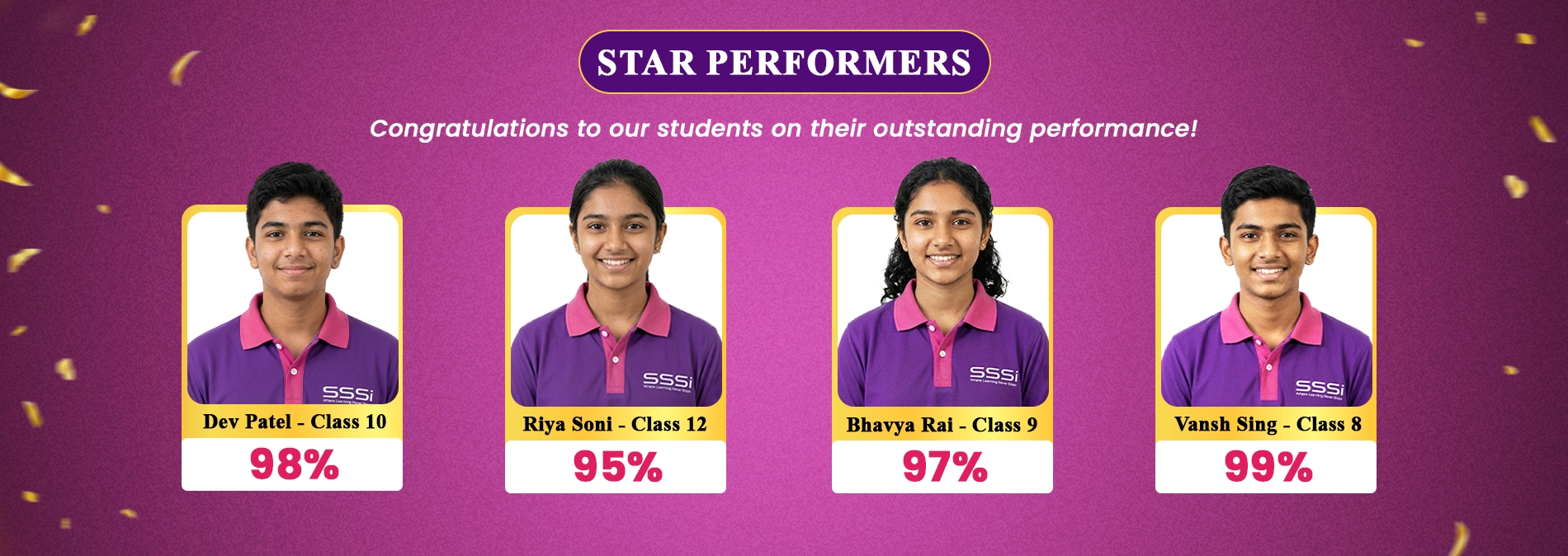
Check out our latest blogs on various trending academic topics.
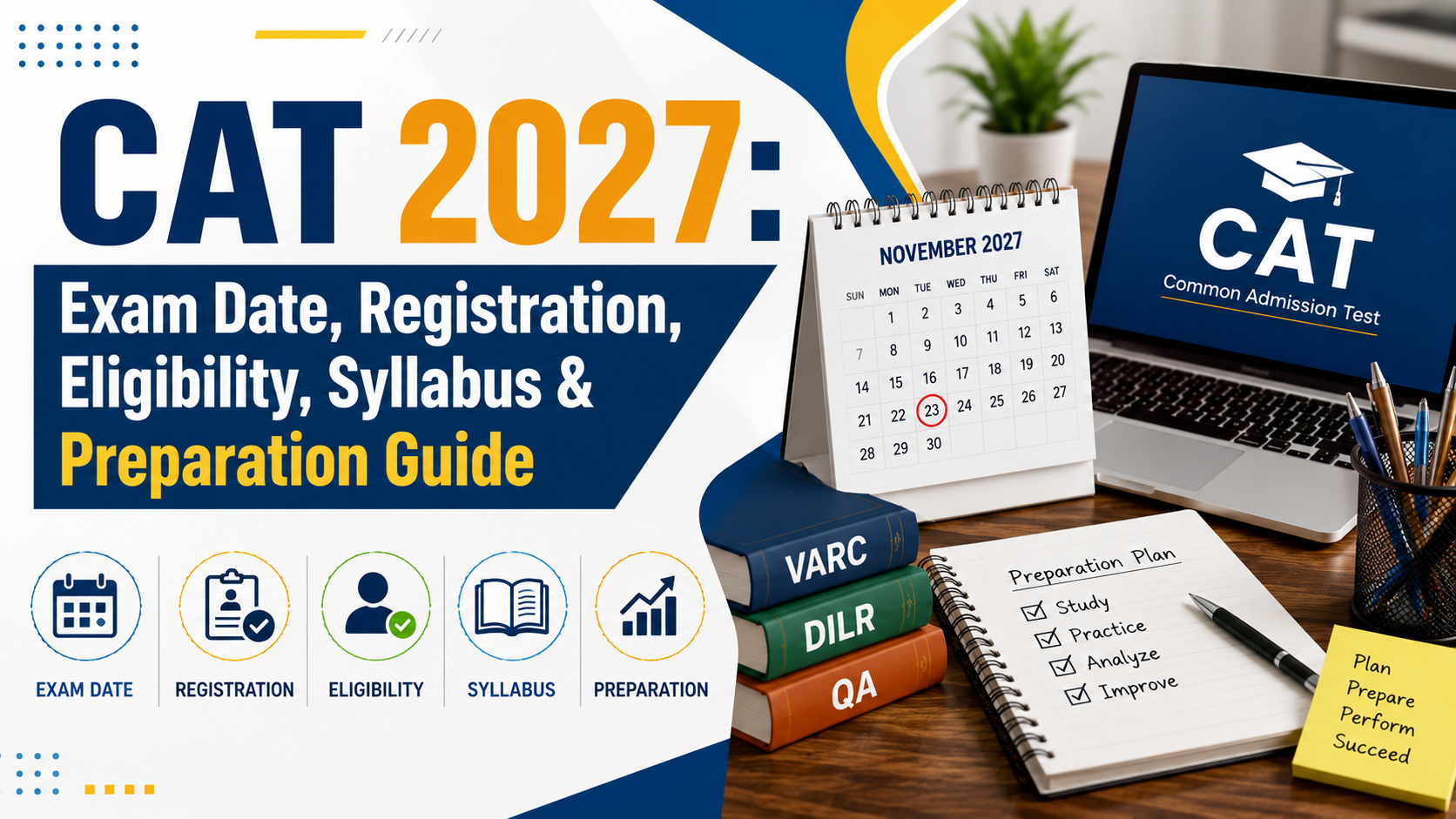
Note: The official CAT 2027 notice will come out around July 2027. All the dates and details listed below are based on past exam trends and expected schedules. Preparing fo...
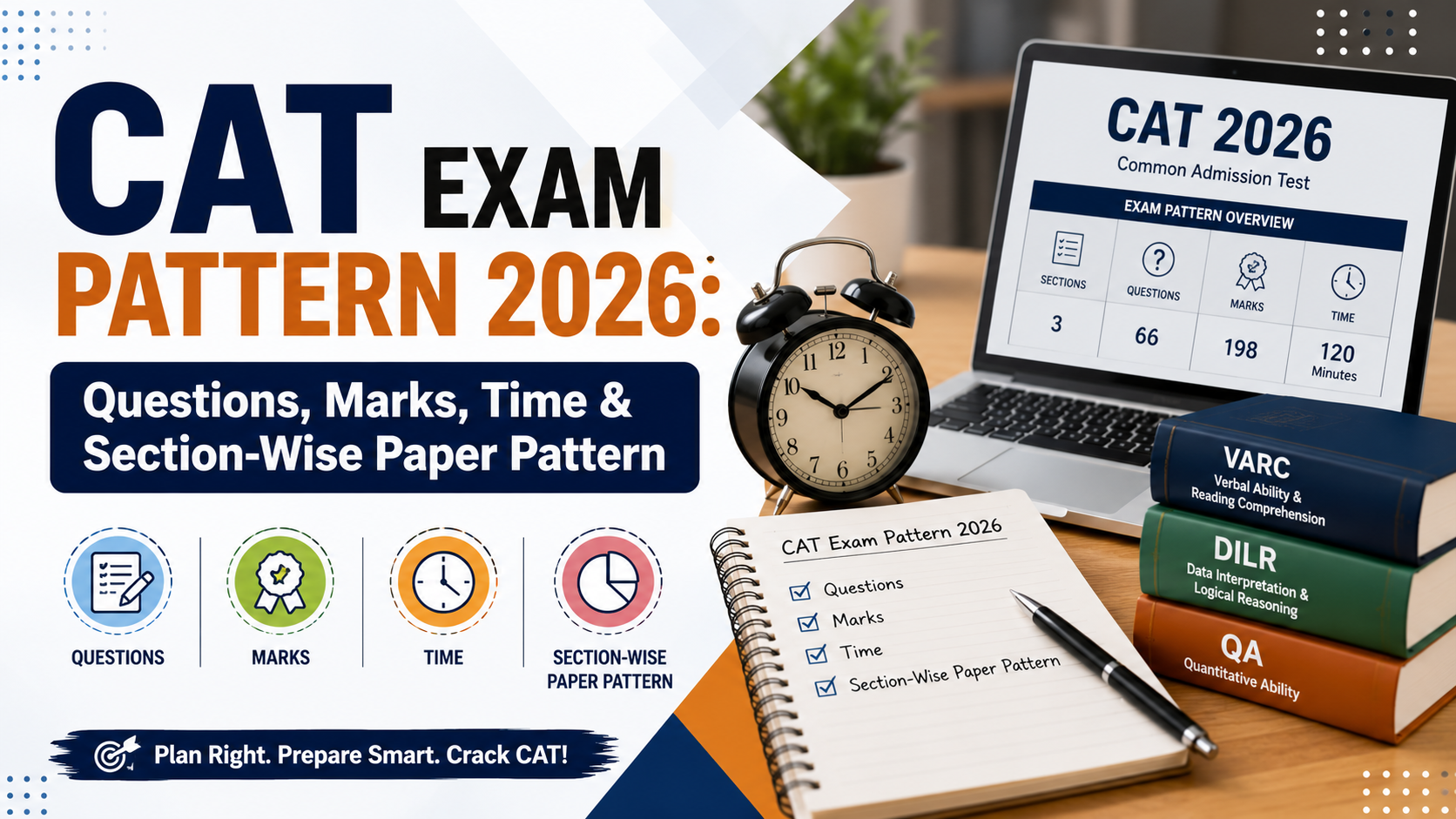
If you want to crack CAT 2026, understanding the exam pattern comes first. Before picking up study material or booking mock tests, you need a clear picture of how the paper wo...
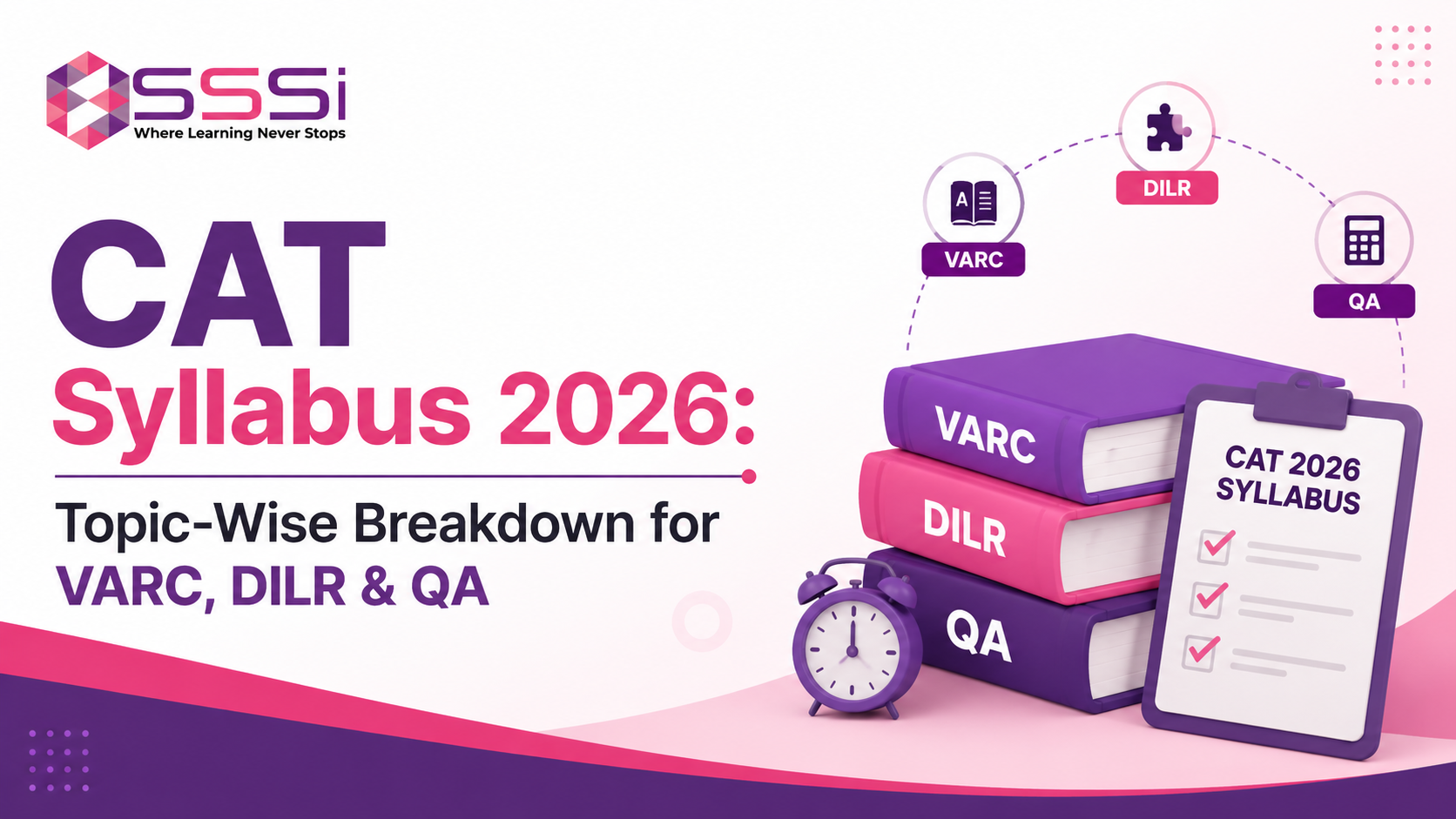
Planning for the Common Admission Test (CAT) gets confusing if you do not have a clear plan. The official IIM notification gives you the test dates and pattern. But it never g...


Copyright © SSSi®. All rights reserved.