
Take online DNB Coaching classes to improve your DNB Coaching grades and score an A+. Connect with our tutors and achieve your academic goals!
Learn the core concepts and key learning objectives with
focused guidance and support.
Preparing for the Diplomate of National Board (DNB) final examination demands more than routine study. Candidates must develop strong subject knowledge, clinical reasoning skills, and the ability to apply concepts effectively in examination scenarios. DNB Final Online Coaching Classes are designed to provide structured preparation that helps medical professionals navigate the extensive syllabus with greater clarity and confidence. At SSSi, every learner receives personalized academic support through live one-on-one sessions, customized study plans, and expert mentorship tailored to their specialty and current level of preparation.
Our coaching programme focuses on building conceptual understanding while strengthening exam-oriented skills such as case-based analysis, clinical decision-making, and MCQ accuracy. Tutors provide detailed explanations of complex topics, guide students through high-yield concepts, and help them master areas that frequently appear in DNB examinations. Regular mock tests, performance evaluations, and revision sessions ensure continuous progress and targeted improvement.
With flexible scheduling options, candidates can prepare effectively alongside clinical duties and professional commitments. Whether you are preparing for your first attempt or seeking focused guidance to improve performance, SSSi provides comprehensive support to help you move closer to achieving your DNB certification and advancing your medical career.
The Diplomate of National Board (DNB) final examination is a crucial certification assessment for doctors who have completed their postgraduate specialty training under the National Board of Examinations (NBE). Recognized as equivalent to MD and MS qualifications in India, The DNB final examination is the certification assessment conducted by the National Board of Examinations (NBE) for candidates who have completed their DNB specialty training. It matters because:
Through live classes for DNB final exam, candidates receive expert guidance, personalized learning support, focused revision plans, and structured preparation aligned with the latest examination requirements.
The DNB final examination is conducted by the National Board of Examinations (NBE) and serves as the final certification assessment for candidates who have completed their postgraduate specialty training under the DNB programme. Recognized as equivalent to MD/MS qualifications in India, the certification holds significant value across government hospitals, private healthcare institutions, academic centers, and tertiary care facilities. Through online tuition for DNB final exam, candidates can gain structured academic support to navigate the extensive syllabus and demanding examination standards effectively.
The DNB Final examination is designed to assess specialty-specific knowledge and clinical competence. While the overall examination framework remains consistent, the content and focus areas vary according to the discipline. Candidates are expected to demonstrate a thorough understanding of core concepts, practical applications, and decision-making principles relevant to their chosen specialty.
The DNB final examination assesses more than factual recall. Examiners evaluate a candidate’s ability to integrate theoretical knowledge with clinical practice and make informed decisions in real-world healthcare situations.
Students preparing through SSSi classes learn to manage the broad syllabus efficiently while maintaining high accuracy standards. Mock tests and previous-year paper analysis help candidates develop exam temperament and improve answer selection strategies.
The DNB final examination is intended for candidates who have successfully completed their postgraduate DNB training in a recognized specialty. Before applying for the examination, candidates must satisfy the eligibility requirements prescribed by the National Board of Examinations (NBE). Understanding these requirements helps aspirants plan their certification journey and prepare effectively through resources such as DNB Final Test Series Online.
To appear for the DNB Final examination, candidates must fulfil the eligibility requirements established by the National Board of Examinations (NBE). These requirements ensure that applicants have successfully completed the necessary academic training, clinical exposure, and specialty-specific obligations before seeking certification.
| Eligibility Requiremen | Details |
|---|---|
| DNB Training Completion | Candidates must have completed the prescribed DNB training programme in their chosen specialty from an NBE-recognized institution. |
| Educational Qualification | An MBBS degree or an equivalent qualification recognised by the appropriate medical authorities is required. |
| Mandatory Training Requirements | All prescribed coursework, clinical postings, and training hours must be completed according to NBE guidelines. |
| Dissertation/Research Work | Completion of a dissertation or research project may be required, depending on the specialty. |
| Specialty-Specific Requirements | Certain specialties may have additional certification, documentation, or training requirements that must be fulfilled before examination eligibility is granted. |
| Examination Compliance | Candidates must satisfy all eligibility and documentation requirements applicable at the time of examination registration. |
Candidates from a wide range of medical disciplines can appear for the DNB final examination, including:
| Examination Component | Minimum Requirement |
|---|---|
| Written Examination | 50% Marks |
| Oral/Practical Examination | 50% Marks |
| Overall Result | Pass in Both Components Mandatory |
| Performance Grade | Aggregate Score |
|---|---|
| Distinction | 70% and Above |
| First Class | 60% – 69% |
| Pass | 50% – 59% |
| Fail | Below 50% in Any Component |
Introductory sentence explaining that scores often reflect preparation quality and exam readiness.
Passing the DNB Final examination secures your certification, but a stronger performance can create additional professional advantages. Higher grades may improve competitiveness for fellowships, academic appointments, specialist positions, and advanced training opportunities. Strong examination results also reflect a deeper understanding of specialty concepts, helping candidates build credibility and confidence as they progress in their medical careers.
Preparing for the DNB final examination requires more than simply covering the syllabus. Candidates must develop strong clinical reasoning, master specialty-specific concepts, and learn effective examination strategies. To understand how to score high in DNB final exam, the students must know that personalized preparation often delivers better outcomes than large classroom batches or generic recorded courses. SSSi focuses on individual learning needs, ensuring every candidate receives targeted academic support, expert mentorship, and structured guidance throughout their preparation journey. At the same time, our commitment to quality education makes us a practical choice for doctors seeking affordable DNB final exam preparation classes without compromising on personalized attention or academic standards.
Learn directly from experienced tutors who have either cleared DNB examinations or actively practice in their respective specialties. Sessions are personalized to your learning pace, allowing detailed discussions, instant doubt resolution, and focused improvement in weaker areas.
Every candidate receives a customized preparation roadmap based on specialty requirements, current knowledge level, available preparation time, and target performance goals. This structured approach helps maximize productivity and ensures systematic syllabus coverage.
Clinical reasoning plays a major role in DNB final success. Our sessions include specialty-focused case discussions, diagnostic approaches, management planning, and decision-making exercises that closely reflect real examination scenarios.
The online learning platform supports live collaboration through digital whiteboards, MCQ-solving sessions, image-based discussions, and interactive concept explanations. Recorded sessions are also available for revision and reinforcement.
Candidates regularly participate in exam-oriented mock tests designed according to the latest DNB pattern. Detailed feedback helps identify knowledge gaps, improve time management, and strengthen answer-selection strategies.
Doctors can schedule sessions around hospital duties, clinical rotations, and professional commitments. This flexibility allows consistent preparation without disrupting ongoing responsibilities.
Candidates receive guidance from tutors with extensive experience in their respective specialties. Their academic expertise and clinical insights help simplify complex topics and focus preparation on areas most relevant to the examination.
Success in the DNB final examination requires consistent preparation, strategic revision, and gradual development of clinical reasoning skills. Through online tuition for DNB final exam, candidates follow a structured four-month preparation roadmap designed to strengthen conceptual understanding, improve problem-solving abilities, and build examination confidence. Each phase focuses on specific objectives to ensure comprehensive coverage of the syllabus while maintaining steady progress.
Our Aim: Build a strong conceptual foundation in the most important and frequently tested areas of the DNB syllabus.
How We Proceed:
Preparation begins with an initial assessment to evaluate current knowledge levels, identify strengths and weaknesses, and understand individual learning requirements. Candidates then focus on mastering core specialty subjects through detailed concept-based learning. Emphasis is placed on understanding disease mechanisms, clinical presentations, diagnostic approaches, and management principles rather than relying solely on memorization. Special attention is given to high-yield topics that frequently appear in DNB examinations, helping candidates establish a strong academic foundation for advanced learning in later phases.
Topics Covered:
Our Aim: Develop mastery in clinical reasoning, case interpretation, and evidence-based decision-making.
How We Proceed:
After establishing a strong conceptual foundation, preparation progresses to the practical application of medical knowledge. During this phase, candidates work through clinical cases that closely resemble those encountered in the DNB final examination. Tutors guide learners through diagnostic reasoning, investigation planning, and treatment selection while highlighting common pitfalls and examiner expectations. Timed discussions and case-based MCQ practice help candidates improve analytical thinking, decision-making speed, and confidence when handling complex clinical scenarios. This phase plays an important role in helping candidates understand why the best online coaching for DNB final in India focuses heavily on real-world clinical application rather than theoretical learning alone.
Topics Covered:
Our Aim: Improve retention, strengthen weaker areas, and develop familiarity with the actual examination pattern.
How We Proceed:
The third month is dedicated to consolidating knowledge through structured revision and continuous assessment. Candidates revisit high-yield topics, analyze previous examination trends, and complete timed practice papers under exam-like conditions. Tutors carefully evaluate performance to identify recurring mistakes, conceptual gaps, and areas requiring additional attention. Focused reinforcement sessions ensure that weaker subjects receive targeted revision before the final stage of preparation. Regular participation in the DNB final test series online further helps candidates refine time management skills, improve question-selection strategies, and build confidence for the actual examination.
Topics Covered:
Our Aim: Achieve maximum examination readiness by refining accuracy, speed, confidence, and decision-making under exam conditions.
How We Proceed:
The final phase focuses on transforming preparation into examination performance. Candidates participate in full-length mock examinations that closely replicate the format, difficulty level, and time constraints of the DNB Final examination. Through online tuition for DNB final exam, tutors provide detailed post-test evaluations that highlight strengths, identify remaining knowledge gaps, and recommend targeted revision strategies. Candidates also learn how to manage examination pressure, avoid unnecessary negative marking, and make informed decisions when faced with challenging questions. By the end of this phase, learners gain a realistic understanding of their readiness level and enter the examination with greater confidence and clarity.
Topics Covered:
Preparing for the DNB final examination requires expert guidance, personalized support, and a learning approach that adapts to the unique needs of each candidate. DNB Final Online Coaching Classes at SSSi are designed to provide focused preparation through one-on-one mentoring, structured study plans, and flexible learning solutions that fit around demanding clinical schedules.
Trusted by 6000+ Learners.

Anika Dhankar
★★★★★"We’ve noticed a good improvement in my child’s studies. She is more confident now and has started taking more interest in her subjects."

Mohammad Shakeel Ahmed
★★★★★"Very happy with the teacher. He explains difficult topics in a simple way, and my son is understanding things much better now."

Alisha Prakash
★★★★★"The online classes have been convenient and easy to follow. The sessions are interactive and my child stays engaged throughout."

Shivam
★★★★★"I’ve had a really good experience here. The team is supportive, communication is easy, and the work environment feels professional."

Abhijeet
★★★★★"I’ve had a great experience with SSSI Online Tutoring Services. The tutors are knowledgeable, supportive, and patient, making lessons easy to understand and helping students improve with confidence.."

Uniyal
★★★★★"I had a wonderful experience with this online tuition platform. The pricing is affordable, tutors are helpful, and the classes are well-organised, making quality education accessible and convenient."

Check out our latest blogs on various trending academic topics.
Note: The official CAT 2027 notice will come out around July 2027. All the dates and details listed below are based on past exam trends and expected schedules. Preparing fo...
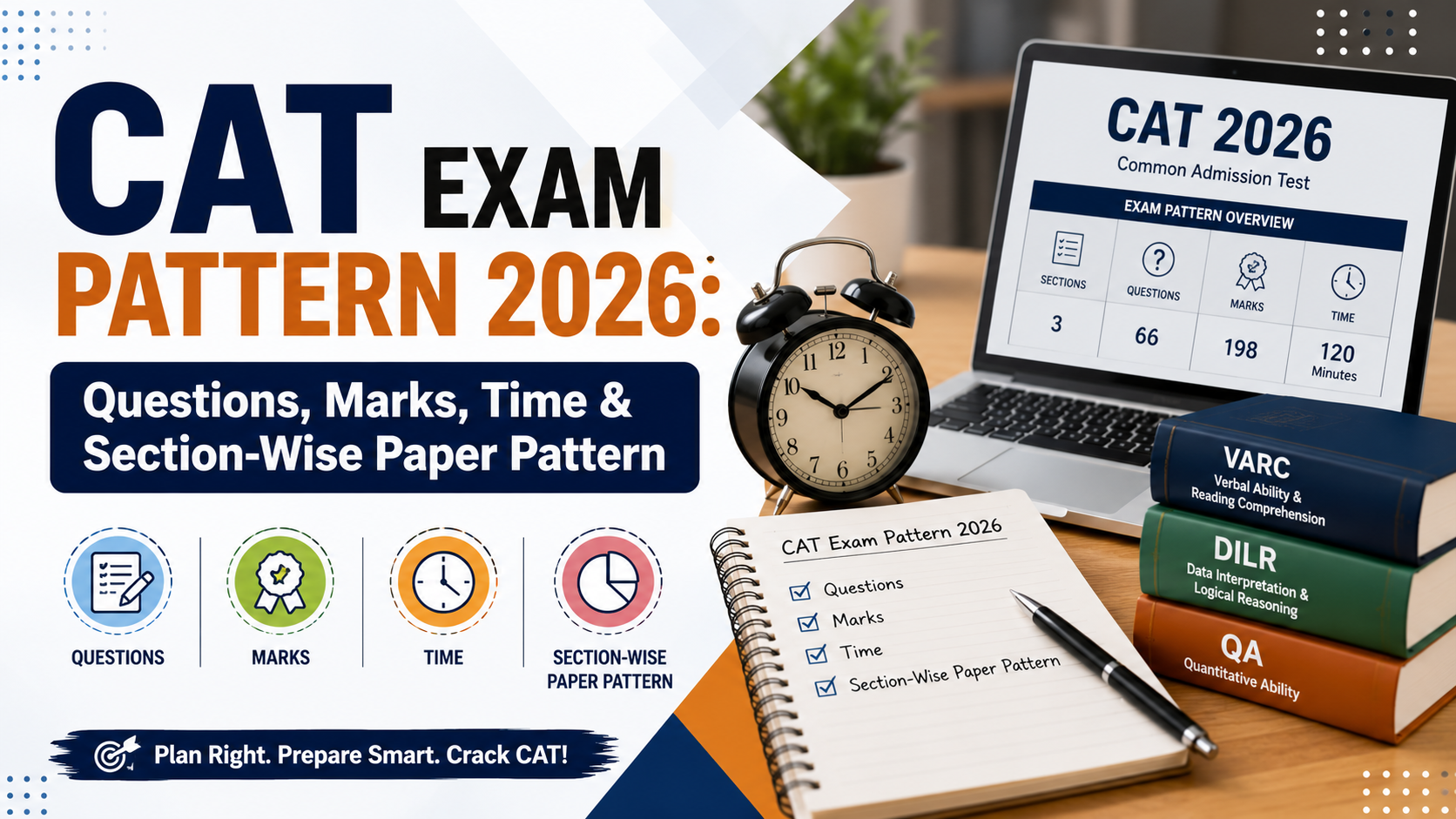
If you want to crack CAT 2026, understanding the exam pattern comes first. Before picking up study material or booking mock tests, you need a clear picture of how the paper wo...
Planning for the Common Admission Test (CAT) gets confusing if you do not have a clear plan. The official IIM notification gives you the test dates and pattern. But it never g...


Copyright © SSSi®. All rights reserved.