
Take online UPSC CMS Coaching classes to improve your UPSC CMS Coaching grades and score an A+. Connect with our tutors and achieve your academic goals!
Learn the core concepts and key learning objectives with
focused guidance and support.
The Union Public Service Commission conducts the Combined Medical Services examination to recruit qualified doctors for various central government healthcare departments and medical services across India. Due to the competitive selection process and extensive syllabus coverage, many aspirants enrol in UPSC CMS Exam Coaching Online programmes offered by institutes such as SSSi to strengthen preparation and improve exam readiness.
This prestigious examination provides medical professionals with opportunities to secure government positions in organizations such as the Railways, Central Health Services, Municipal Corporations, and other public healthcare institutions. The examination is recognized for its rigorous assessment process, which evaluates both medical knowledge and general awareness required for responsible government medical service roles.
Candidates planning to appear for the UPSC Combined Medical Services examination must carefully understand the eligibility requirements and the updated UPSC CMS Syllabus 2026 to prepare effectively for every stage of the selection process. SSSi guides aspirants through both eligibility verification and structured exam preparation to ensure a well-planned approach.
The UPSC Combined Medical Services examination is conducted in two stages to evaluate both the academic knowledge and professional suitability of medical candidates. Many aspirants preparing through online UPSC coaching programs at SSSi benefit from systematic preparation strategies designed specifically for both the written and personality assessment stages.
| Paper | Subjects | Duration | Maximum Marks | |
|---|---|---|---|---|
| Paper I | General Knowledge | General Knowledge | 3 Hours | 250 |
| Clinical | Medical Knowledge (Clinical & Preclinical) | Medical Knowledge (Clinical & Preclinical) | 3 Hours | 250 |
The interview stage evaluates the candidate’s personality, communication skills, decision-making ability, professional ethics, and suitability for government medical services. Candidates are expected to demonstrate confidence, clarity of thought, and awareness of healthcare-related issues during the interaction.
Admission to AYUSH postgraduate programmes is based on the qualifying percentile secured in the examination. Candidates must meet the minimum category-wise cut-off percentile to become eligible for the counselling process.
The UPSC Combined Medical Services examination includes a wide-ranging syllabus designed to assess both theoretical medical knowledge and practical clinical understanding. Candidates must prepare systematically across preclinical, paraclinical, clinical, and general awareness subjects to perform well in the examination. In recent years, the examination approach has become more application-oriented, requiring stronger conceptual clarity and analytical thinking from aspirants.
Preclinical subjects form the academic base of medical sciences and help candidates develop a strong understanding of the human body and its functional systems.
Anatomy focuses on the structural organization of the human body and remains an important subject in the UPSC CMS examination. The syllabus generally covers gross anatomy, embryology, histology, neuroanatomy, and applied anatomy. Questions are often designed to test the candidate’s understanding of organ systems, blood supply, nerve pathways, musculoskeletal structures, and clinical anatomical correlations.
Physiology evaluates the functional mechanisms of the body and includes cardiovascular, respiratory, endocrine, gastrointestinal, renal, reproductive, and nervous systems. The examination often includes conceptual and case-based questions that assess the candidate’s ability to interpret physiological processes under different medical conditions.
Biochemistry focuses on molecular biology, metabolism, enzymes, genetics, nutrition, and biochemical pathways associated with diseases. Candidates must understand carbohydrate metabolism, lipid metabolism, protein synthesis, acid-base balance, and laboratory interpretation techniques. Integrated preparation of physiology and biochemistry is highly beneficial because both subjects are interconnected within clinical medicine.
Paraclinical subjects bridge the gap between basic sciences and clinical application. These subjects are essential for understanding disease mechanisms, diagnosis, pharmacological management, and laboratory investigations.
Pathology involves the study of disease processes and includes cellular injury, inflammation, neoplasia, hematology, immunopathology, and systemic pathology. Questions frequently assess a candidate’s ability to identify pathological changes associated with various diseases and clinical conditions.
Microbiology focuses on bacteria, viruses, fungi, parasites, immunology, infection control, and diagnostic microbiology. Candidates are expected to understand disease transmission, laboratory diagnosis, antimicrobial resistance, and preventive healthcare measures. Infectious diseases and epidemiology continue to receive significant importance because of their relevance in public healthcare administration.
Pharmacology evaluates understanding of drug classification, mechanisms of action, therapeutic uses, contraindications, adverse effects, and drug interactions. Candidates are expected to understand medications used in cardiovascular diseases, infections, endocrine disorders, psychiatric conditions, and emergency medicine.
Toxicology includes poisoning, toxic substances, antidotes, environmental toxins, and medico-legal aspects of poison management. Clinical application-based pharmacology questions are increasingly common, making conceptual clarity essential for accurate problem-solving.
The examination pattern now places greater emphasis on integrated disease understanding, especially when compared with the earlier UPSC CMS Syllabus 2025, where direct theoretical questions were more common in several sections.
Clinical subjects carry major weightage in the UPSC CMS examination and assess diagnostic reasoning, patient management, and treatment planning abilities.
Medicine is among the most important subjects in the examination and includes cardiology, neurology, nephrology, respiratory medicine, endocrinology, infectious diseases, dermatology, and emergency medicine. Questions are commonly case-based and require analytical interpretation of symptoms, investigations, and treatment approaches.
Surgery includes general surgery, trauma care, orthopedics, ENT, ophthalmology, urology, and surgical emergencies. Candidates must understand diagnostic procedures, surgical management principles, postoperative complications, and emergency response protocols.
Obstetrics covers antenatal care, labour management, maternal health, postpartum complications, gynecological disorders, and reproductive healthcare. Questions may also assess awareness of maternal health initiatives and emergency obstetric management techniques.
Psychiatry evaluates understanding of mental health disorders, psychiatric classification, behavioural conditions, substance abuse, and psychopharmacology. Commonly tested areas include anxiety disorders, depression, schizophrenia, and psychiatric emergencies.
Community Health is highly important because the UPSC CMS examination is directly connected with public healthcare administration. The syllabus includes epidemiology, biostatistics, national health programmes, vaccination policies, sanitation, preventive medicine, healthcare delivery systems, and environmental health.
Anesthesia includes airway management, anesthetic drugs, preoperative assessment, pain management, resuscitation techniques, and critical care support. Emergency medicine concepts are frequently integrated with anesthesia-related questions.
Candidates preparing through structured guidance programmes at SSSi and other reputed institutes offering CMS coaching classes in India often focus heavily on clinical case-solving techniques and integrated medical revision strategies for these subjects.
The General Knowledge section evaluates awareness beyond medical sciences and plays an important role in the overall merit ranking.
Candidates must stay updated with national and international current affairs, healthcare reforms, government initiatives, and public administration developments relevant to medical services.
This section assesses understanding of Indian history, constitutional structure, governance systems, geography, parliamentary procedures, and administrative frameworks relevant to public service examinations.
Health Policy and Public Health focus on national healthcare missions, disease control programmes, healthcare accessibility, vaccination drives, preventive healthcare initiatives, and public health administration. Candidates preparing for government medical services must develop a strong awareness of India’s evolving healthcare priorities and policy framework.
A well-structured preparation strategy helps candidates cover the extensive UPSC CMS syllabus systematically while improving revision, speed, and conceptual clarity. For this purpose, many aspirants choose SSSi to receive UPSC CMS online classes with certified tutors and follow a phase-wise preparation approach for better consistency and exam readiness.
Candidates should study clinical subjects in depth while improving analytical and case-based problem-solving skills. General Knowledge preparation should also continue regularly alongside medical subjects.
Candidates should solve previous year papers regularly and identify weaker areas through detailed analysis. Time management and examination accuracy become major priorities during this stage.
Candidates should revise important concepts repeatedly while staying updated with healthcare-related current affairs and government policies.
A well-structured coaching programme can significantly improve preparation quality by helping aspirants manage the extensive UPSC CMS syllabus with better guidance, revision planning, and consistent practice. SSSi provides comprehensive academic support designed specifically for medical aspirants preparing for government healthcare services in India. Through expert mentorship, organized resources, and regular assessment, candidates receive a more focused and examination-oriented learning experience.
SSSi offers detailed online and classroom learning support led by experienced faculty members who understand the UPSC CMS examination pattern, subject priorities, and recent question trends.
Comprehensive study material plays an important role in improving retention and simplifying revision during long preparation cycles. SSSi provides organized resources that help candidates revise efficiently and focus on high-yield examination topics.
Regular mock test practice helps candidates improve examination speed, accuracy, and confidence under timed conditions. Aspirants using the CMS exam mock test online platforms at SSSi gain better familiarity with the examination pattern through repeated practice and performance evaluation.
Consistent mentor support helps aspirants remain disciplined and academically focused throughout the preparation journey. Personalized guidance also helps candidates identify weaker areas and improve revision strategies more effectively.
The personality test stage requires confidence, communication skills, and professional awareness. SSSi provides structured interview preparation support to help candidates improve their answer presentation, communication, and professional interaction skills.
Many aspirants searching for guidance on how to prepare for UPSC CMS exam at home choose structured coaching support from SSSi because it combines self-study flexibility with expert mentorship, organized resources, mock test practice, and disciplined preparation strategies.
Choosing the right reference books is extremely important for systematic UPSC CMS preparation because the examination requires strong conceptual understanding, clinical interpretation, and regular revision. Standard medical textbooks help candidates build academic depth, while concise notes and current affairs resources improve examination-oriented preparation. Aspirants enrolled in SSSi and other reputed institutes offering CMS coaching classes in India often combine textbook learning with structured revision material for better preparation efficiency.
Preclinical subjects form the foundation of medical sciences and require detailed conceptual clarity for advanced clinical understanding.
Clinical subjects carry major weightage in the UPSC CMS examination and require both theoretical learning and practical application-based preparation.
Candidates preparing through structured online UPSC Coaching programmes often use simplified coaching notes alongside these standard textbooks to improve revision speed and objective question-solving ability.
The General Knowledge section requires consistent reading habits and awareness of current national and international developments, particularly those related to healthcare and governance.
Success in the UPSC Combined Medical Services examination depends on disciplined preparation, conceptual clarity, consistent practice, and proper physical and mental balance. Candidates following structured CMS exam preparation tips and strategy plans often perform better because they maintain consistency throughout the lengthy preparation process.
Proper time management helps candidates cover the syllabus systematically without creating unnecessary academic pressure. A balanced daily schedule improves productivity and supports long-term retention.
Strong conceptual understanding is essential because the examination increasingly focuses on analytical and application-based questions rather than direct factual recall.
Regular practice improves speed, accuracy, and confidence during the examination. Objective question-solving also helps candidates identify weaker areas and improve performance gradually.
Maintaining physical and mental well-being is equally important during UPSC CMS preparation because long study hours can create stress and fatigue if not managed properly.
The UPSC Combined Medical Services selection process is designed to evaluate both the academic competence and professional suitability of medical aspirants seeking central government healthcare positions. Candidates preparing through structured programmes such as UPSC CMS Exam Coaching Online often gain a better understanding of the examination pattern, merit calculation process, and interview expectations.
The written examination is the most important stage of the selection process because it carries the highest weightage in the final merit calculation. Candidates must therefore develop strong conceptual clarity, revision consistency, and objective problem-solving skills throughout preparation.
The interview stage evaluates communication skills, professional awareness, confidence, decision-making ability, and suitability for government medical services. Candidates are also assessed on healthcare awareness, ethical understanding, and overall personality.
Selected candidates are allocated to various government medical services and healthcare departments based on their final merit rank, category, and available vacancies. Aspirants preparing according to the updated UPSC CMS Syllabus 2026 generally focus on both academic preparation and personality development to improve their overall selection prospects.
Reliable study resources and updated healthcare information are essential for effective UPSC CMS preparation. Candidates should regularly follow official government portals, medical news platforms, and healthcare policy updates to stay informed about examination notifications, public health developments, and medical advancements relevant to the syllabus.
Important resources for preparation include:
Along with self-study resources, expert academic guidance can significantly improve preparation quality, revision consistency, and examination confidence. SSSi provides structured coaching support, experienced faculty guidance, mock test practice, interview preparation, and updated study material designed specifically for UPSC CMS aspirants across India. Candidates looking for an affordable CMS exam preparation often prefer SSSi because of its balanced combination of quality mentorship, flexible learning support, and examination-oriented preparation strategies.
The UPSC Combined Medical Services examination offers medical graduates an excellent opportunity to build stable and respected careers within India government healthcare system. Success in the examination requires conceptual clarity, disciplined preparation, continuous revision, and a strong examination strategy. With proper guidance, structured study plans, regular mock practice, and expert mentorship, aspirants can significantly improve their chances of selection. SSSi supports candidates through comprehensive learning resources, experienced faculty guidance, interview preparation, and examination-focused coaching designed specifically for UPSC CMS aspirants across India.
Trusted by 6000+ Learners.

Anika Dhankar
★★★★★"We’ve noticed a good improvement in my child’s studies. She is more confident now and has started taking more interest in her subjects."

Mohammad Shakeel Ahmed
★★★★★"Very happy with the teacher. He explains difficult topics in a simple way, and my son is understanding things much better now."

Alisha Prakash
★★★★★"The online classes have been convenient and easy to follow. The sessions are interactive and my child stays engaged throughout."

Shivam
★★★★★"I’ve had a really good experience here. The team is supportive, communication is easy, and the work environment feels professional."

Abhijeet
★★★★★"I’ve had a great experience with SSSI Online Tutoring Services. The tutors are knowledgeable, supportive, and patient, making lessons easy to understand and helping students improve with confidence.."

Uniyal
★★★★★"I had a wonderful experience with this online tuition platform. The pricing is affordable, tutors are helpful, and the classes are well-organised, making quality education accessible and convenient."

Check out our latest blogs on various trending academic topics.
Note: The official CAT 2027 notice will come out around July 2027. All the dates and details listed below are based on past exam trends and expected schedules. Preparing fo...
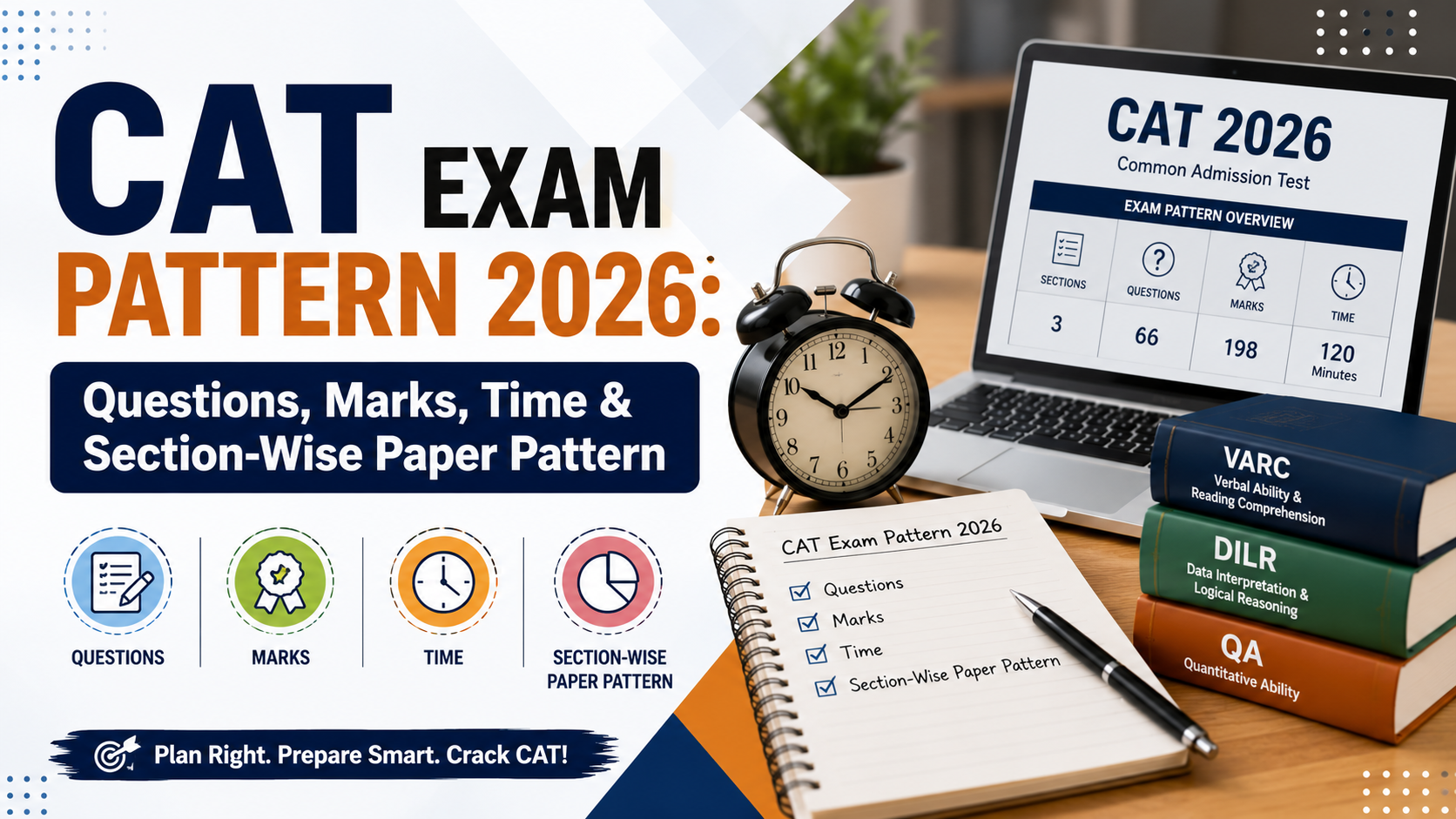
If you want to crack CAT 2026, understanding the exam pattern comes first. Before picking up study material or booking mock tests, you need a clear picture of how the paper wo...
Planning for the Common Admission Test (CAT) gets confusing if you do not have a clear plan. The official IIM notification gives you the test dates and pattern. But it never g...


Copyright © SSSi®. All rights reserved.